
Japanese Blueberry Trees in Las Vegas: What Happens When You Don't Give Them Enough Water
40 Trees, One Commercial Property, One Hot Las Vegas May
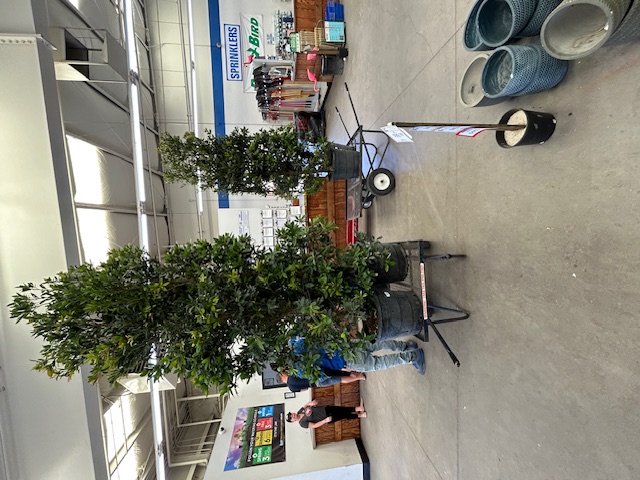
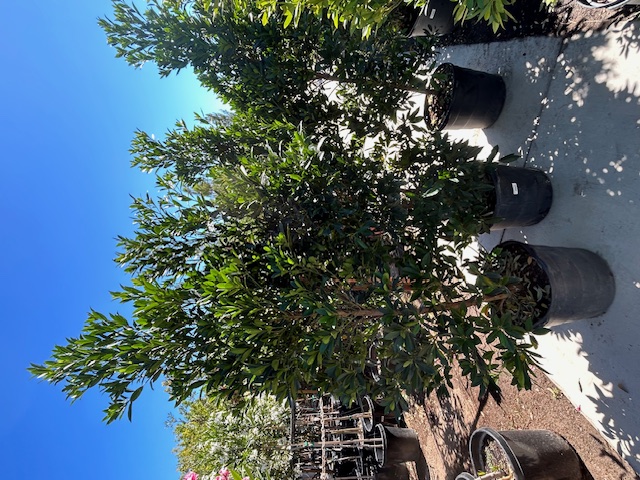
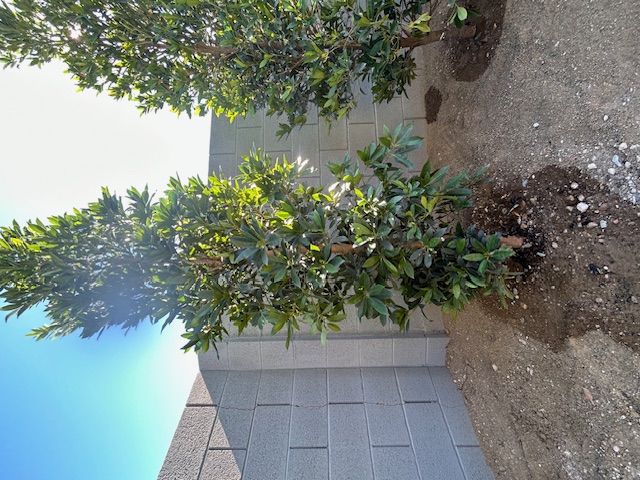
In May 2025, we installed 40 Japanese Blueberry trees on a commercial property in Las Vegas. The goal was a dense, uniform privacy screen along a block wall — a look that Japanese Blueberries deliver beautifully when they establish well. Each tree was a 15-gallon container specimen, sourced fresh from the nursery and planted the same day they arrived.
Before going in the ground, we amended the soil with pay dirt — a blend of topsoil and organic matter that gives the root ball a far better growing environment than native Las Vegas caliche can provide on its own. We set each tree on a drip system with 3 emitters at 2 GPH, placed around the base of the root ball. By any reasonable standard, this felt like a solid setup.
Then the trees started looking sick.
The Trees Started to Look Wrong
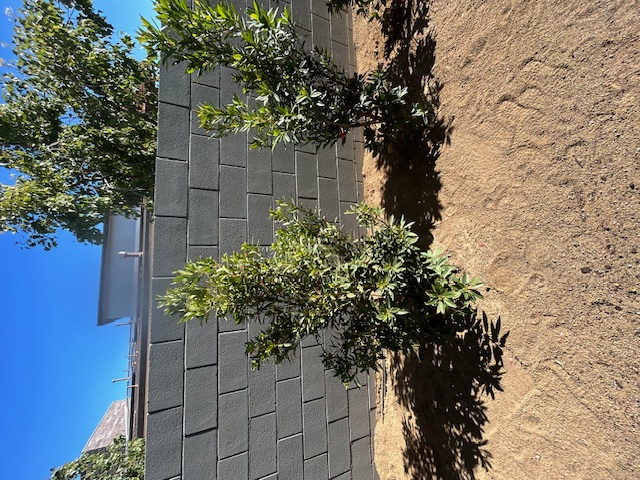
About a week after installation, the foliage started showing stress. Leaves were losing their deep green color — turning pale, slightly yellowish, and limp. A few trees were dropping leaves at the edges. None of them looked actively dead, but none of them looked healthy either.
In our experience, this kind of presentation in a newly planted tree points to one of two things: too much water or not enough. In Las Vegas in May, with temperatures already climbing past 100°F by early afternoon, the far more likely culprit was insufficient moisture reaching the root zone — not overwatering.
Three Drip Heads Weren't Enough — Here's the Math
We ran the numbers. Each tree had 3 drip emitters at 2 GPH, delivering 6 gallons per hour. For smaller stock in mild conditions, that might be adequate. But 15-gallon trees — freshly transplanted, in Las Vegas heat — demand significantly more.
A 15-gallon Japanese Blueberry has a root ball roughly 14–16 inches across. In May, with soil surface temperatures already exceeding 90°F, evaporation and transpiration are extremely high. The 6 GPH we were delivering was being consumed before it could penetrate deep enough to sustain the root zone.
We added 2 additional drip heads per tree — positioned between the existing emitters to cover more of the root ball's circumference — bringing each tree to 5 heads at 2 GPH each, for 10 GPH total. We also covered the trees with burlap during the worst of the heat, tenting the fabric over the canopy to block direct sun radiation while still allowing airflow underneath.
Burlap is one of the most underused tools in Las Vegas landscaping. For any recently transplanted tree — especially non-native species — covering the canopy during the first serious heat wave can be the difference between recovery and loss. It costs almost nothing and buys the root system critical time to expand before peak-season demand hits.
Full Recovery — and a Real Lesson About Japanese Blueberries
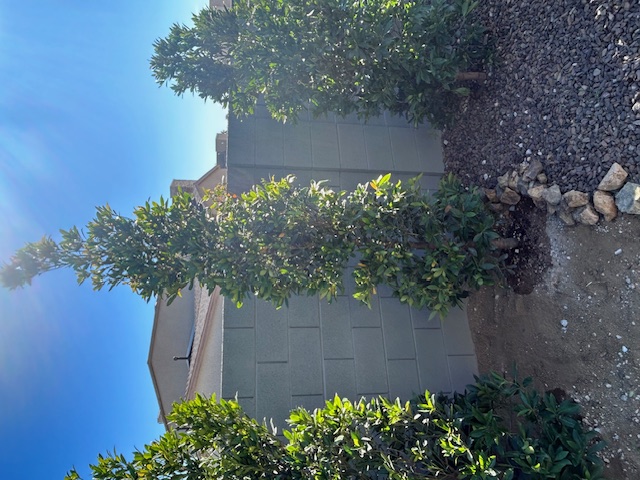
Within a few weeks of the drip adjustment and burlap protection, the trees were clearly recovering. New growth came in dark green and strong. By the time summer peaked, the canopy was filled out and every tree was pushing new growth. Today, they look exactly like what the client originally envisioned: a dense, uniform privacy screen that holds its color year-round.
Japanese Blueberry trees are popular in Las Vegas for good reason — they're one of the best privacy and evergreen shade trees available here. But they are not low-maintenance in the first year. They need irrigation sized to their actual root ball, properly amended soil at planting, and physical protection during extreme heat while they're getting established.
Key Takeaways for Planting Japanese Blueberry Trees in Las Vegas
Size your drip system to the tree, not a rule of thumb
A 15-gallon tree in Las Vegas summer needs at minimum 5 emitters at 2 GPH. Three heads may work for smaller stock or cooler months — it is not enough for large trees during peak heat.
Amend the soil — every single time
Native Las Vegas soil has less than 1% organic matter. Pay dirt or a quality soil blend mixed into the planting hole gives the root ball the environment it needs to expand and actually absorb water.
Burlap during the first heat waves
Newly transplanted trees have not yet hardened their foliage to full desert sun. Tenting burlap over the canopy during stretches above 105°F reduces moisture loss and prevents sun scorch without suffocating the tree.
Pale and limp almost always means underwatering
In Las Vegas in summer, a newly planted tree showing pale or yellowing foliage is an irrigation problem far more often than overwatering. Check your drip runtime and emitter coverage before anything else.
Japanese Blueberries are worth the first-year effort
Dense canopy, evergreen, clean upright form, and fast fill-in once established. For privacy screening in Las Vegas, this is one of the best options available. Get through the first summer and you are set.
Thinking About Japanese Blueberry Trees for Your Property?
We install and maintain Japanese Blueberry trees throughout Las Vegas, Henderson, and North Las Vegas. Free on-site estimates — we will tell you exactly what your property needs and size the irrigation correctly from day one.